Business Automation in Birkenhead, Merseyside
Automation is not just for corporates — a Birkenhead business of five people loses more hours to re-typing, chasing and copying between systems than most owners ever total up. ZeroPixel builds automation for businesses in Birkenhead and across Merseyside: workflows, integrations and document processing, all on the systems you already run.
Birkenhead faces Liverpool across the Mersey with a shipyard that still builds and refits vessels, and a docks estate being redeveloped around it. For a manufacturing town the pattern is familiar: decent tools that do not talk to each other, and a team that has quietly become the courier between them.
We work with Birkenhead businesses in shipbuilding and marine engineering, logistics and offshore wind and beyond. Every automation is connected to your live systems, logs what it does, and is measured in hours returned per week — because automation nobody can measure is just software.
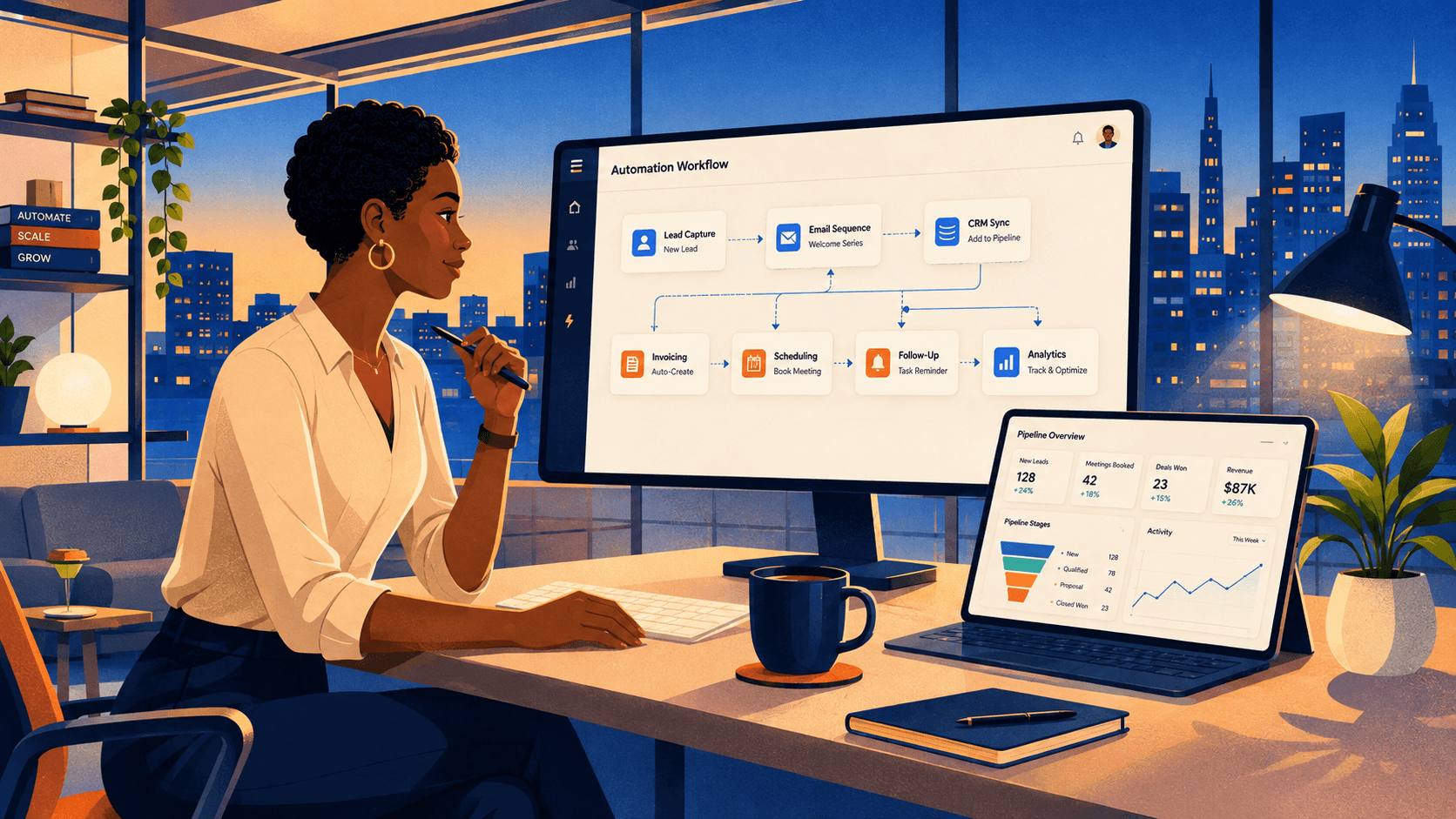
What we build for Birkenhead businesses
These are the three kinds of automation that fit a manufacturing town best — all built on the systems you already run, all owned by you.
Document processing
Invoices, orders, applications and forms read automatically — the data extracted, checked and filed into your systems while the paperwork is still arriving.
Workflow automation
Processes that run themselves: enquiries routed, approvals chased, records updated and confirmations sent — with no one copying and pasting in between.
System integrations
Your CRM, accounts package, inbox and job system finally talking to each other — data entered once and correct everywhere, instead of re-keyed three times.
The paperwork between enquiry and delivery
Manufacturing and trade businesses run on documents — RFQs, purchase orders, delivery notes, invoices — and most of the delay in any job is those documents waiting for someone to re-key them. Automating that flow shortens quote turnaround, keeps job records consistent across systems, and removes the transcription errors that turn into disputes months later.
In practice the Birkenhead businesses with the most to gain are in shipbuilding and marine engineering, logistics and offshore wind — sectors that run on quotes, bookings, invoices and compliance paperwork. Each of those is information moving between systems, and every manual hop in that journey is a candidate for automation you can measure in hours.
Automate one process at a time, and measure it. The projects that fail are scoped as a grand transformation; the ones that pay off pick a single workflow, attach a number to it — hours per week, errors per month — and prove the number moved. That measurement is also how you decide what to automate next.
Birkenhead — common questions
Is a Birkenhead business our size big enough to automate?
What would a first automation project look like here?
Do we need to change the software we already use?
Do you work with Birkenhead businesses remotely?
Isn't automation overkill for a manufacturing town business?
How long does an automation project take?
Near Birkenhead
We cover the whole of Merseyside. These are the neighbouring towns we work in most often — and the county page has the full picture.